
Financial Strategy · Cash control · Closing guide
How to Manage Cash Collections in a Study Library
Control physical cash from the moment it is received through recording, custody, closing, discrepancy review, handover, deposit and reconciliation.
Quick answer
Cash collection is both a payment-record problem and a physical-custody problem. Identify the valid obligation, receive and count the money, record it promptly, allocate it, issue a receipt, secure the cash, record authorized outflows, close the session, count actual cash, compare it with expected cash, investigate differences and document handover or deposit.
Cash payment record ≠ physical cash · receipt ≠ physical cash · opening cash ≠ collection · cash closing ≠ bank reconciliation.
What cash collection management means
A controlled process identifies who received money, where it was received, how it was counted, which payment and receipt represent it, who held it afterward, what authorized cash moved out and how the closing amount was derived. A payment screen alone does not control a drawer, safe, handover or deposit.
Collection
What cash was received and for which valid obligation?
Custody
Who currently holds it and which cash session contains it?
Closing
Does physical cash agree with the recorded expectation?
Cash session lab · hypothetical values
Expected cash is calculated before the physical count
Use the system-recorded opening amount, cash inflows and authorized cash outflows to derive an expectation. Then compare it with an independently performed physical count.
Expected closing cash
₹19,000
Cash difference
₹-200
Interpretation
Shortage signal: document and investigate; do not rewrite the payment history.
Expected = opening cash + recorded inflows − recorded outflows. Difference = actual physical cash − expected closing cash.
Physical cash and digital record
Two layers must remain connected
Digital/business record
Obligation, payment, allocation, receipt, cashier, counter, branch, status and later refund or correction.
Physical custody
Drawer or cash box, opening amount, counted inflows, authorized outflows, current custodian, closing count and handover/deposit evidence.
Receive, count and record promptly
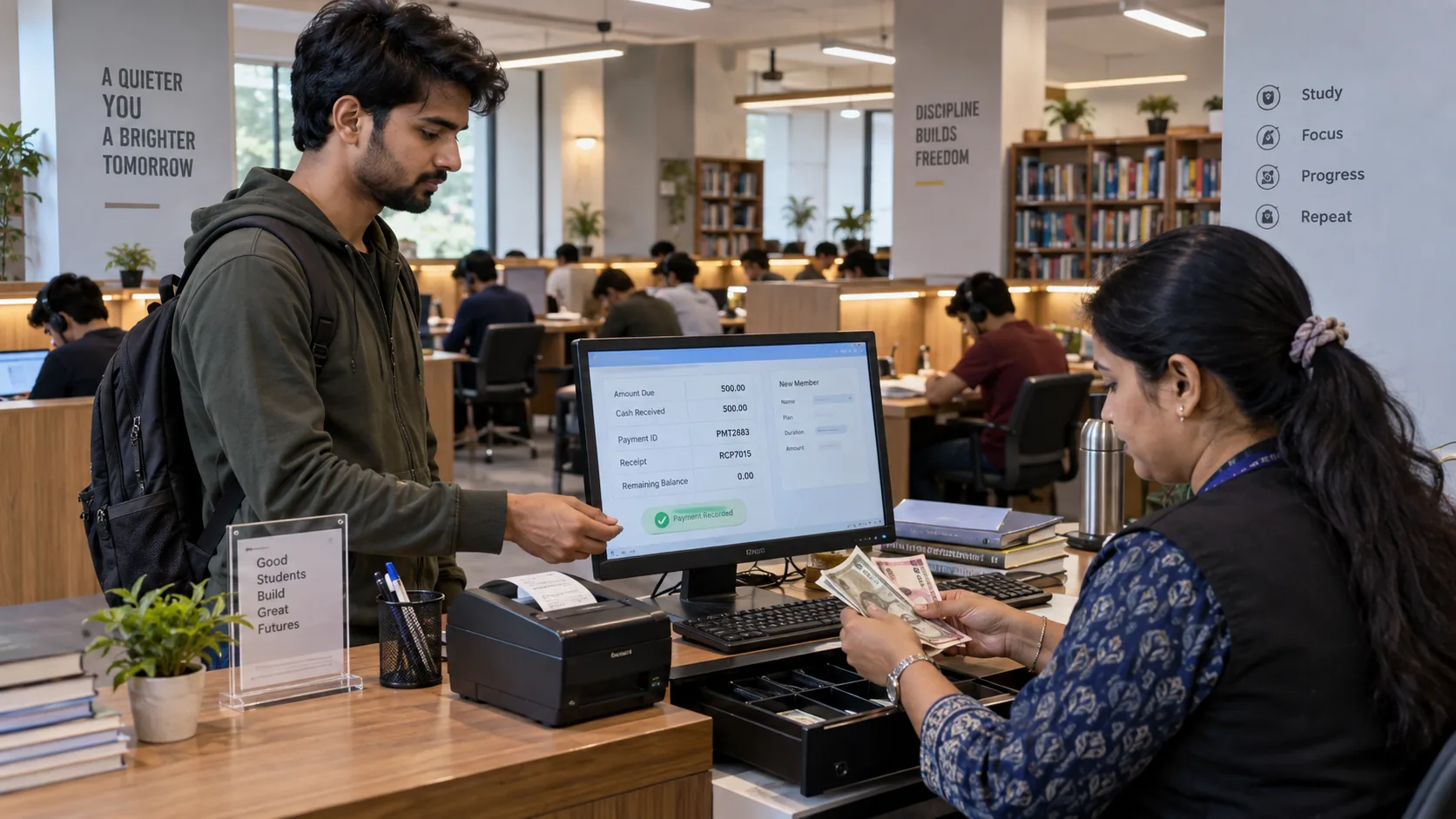
Before accepting money, confirm the valid obligation and the amount due. Count the cash with the member or according to the local procedure, confirm the amount, record the payment against the right member and obligation, preserve cashier/counter/branch/session context, and issue the truthful receipt through the approved workflow.
Define cashier, counter and custody
A cash session should identify the branch, counter or drawer, responsible cashier, opening amount, start/end context and status. Uncontrolled shared drawers weaken accountability unless a specific controlled model records each handover. During the day, keep collections separate from petty cash and record authorized cash movements rather than netting them invisibly.
| Cash movement | Meaning | Control context |
|---|---|---|
| Collection | Money received for a valid obligation | Payment, allocation, receipt, cashier |
| Refund | Authorized money returned | Linked refund/reversal event |
| Transfer / handover | Custody moved | Source, destination, acknowledgements |
| Deposit | Cash moved to bank or deposit custody | Evidence and in-transit status |
| Approved cash outflow | Authorized cash removed | Reason, actor and source record |
A cash difference is a signal, not a conclusion
If physical cash is short, document the difference and investigate timing, recording, authorized outflows, handovers, duplicate or missing records and count procedure. If cash is over, preserve the same discipline; do not classify the unexplained amount as extra revenue. Staff should not edit successful payments merely to make the drawer match.
Shortage signal
Recount, freeze the evidence, review the session and handover trail, record reason/status and escalate according to policy.
Overage signal
Recount, check unrecorded collections or opening-cash errors, preserve the exception and avoid treating it as revenue by convenience.

Close, hand over and deposit with evidence
Closing asks whether physical cash agrees with the expected amount. Handover asks whether custody moved from one identified role or location to another. Deposit asks where the cash went next. These are related but distinct. A handover or bank deposit is not a second collection and does not create new revenue.
Multiple cashiers and branches
Use a separate session or controlled responsibility boundary when staff or shifts change. For multiple branches, preserve collecting branch, counter, cashier, source/destination context and central-office handover details. A central account or office does not erase the branch where the operational collection occurred.
RBAC, corrections and audit
Separate permissions for collecting, refunding, closing, reopening, approving cash adjustments, recording handovers, reviewing differences and exporting reports where the verified architecture supports it. Backdated cash payments deserve caution because physical custody evidence is time-sensitive. Audit logs supplement business cash-movement records; they do not replace them.
Where Libix fits
Libix — Library OS, from CodePex Technologies Private Limited
Libix is positioned for connected study-library operations around payments, receipts, cash movements, branches, roles and reports. This guide explains the control method; current cash-session, closing, handover, deposit and discrepancy capabilities must be verified against approved product documentation and the live implementation.
Cash collection SOP
Frequently asked questions
What is the basic formula for closing cash?
Expected closing cash equals opening cash plus recorded cash inflows minus recorded cash outflows.
How is a cash shortage or overage calculated?
Cash difference equals actual physical cash minus expected closing cash. A negative result is a shortage signal; a positive result is an overage signal.
Is opening cash part of today’s collection?
No. Opening cash is the starting custody amount and should remain distinct from the period’s collections.
Should staff record cash payments immediately?
Prompt recording reduces memory and custody gaps. The payment, allocation, receipt, cashier, counter and session context should remain linked.
Can expenses be paid directly from collected cash?
Only through an explicitly controlled and recorded cash-outflow workflow. Cash expenses should not disappear into net collection totals.
Is a bank deposit another collection?
No. A deposit or handover is a later cash movement and custody change, not new revenue or a second collection.