
Delhi · NCT · Library OS
Study Library Management Software for Delhi
From civil-services study spaces in Old Rajinder Nagar to multi-exam reading rooms around Mukherjee Nagar, Libix brings members, seats, shifts, fees and attendance into one operating system.
Built for paid study libraries, reading rooms and self-study centres.

Delhi network view
One Delhi. Three study ecosystems.
This is an editorial model of operating contexts, not a quantitative map, ranking or customer network.
Old Rajinder Nagar / Karol Bagh
Civil-services ecosystem
- • UPSC and civil-services preparation
- • Long-duration study and dedicated desks
- • Extended hours, lockers and premises awareness
Mukherjee Nagar / Nehru Vihar
Multi-exam ecosystem
- • UPSC, SSC, banking, railway and defence preparation
- • Different schedules and membership durations
- • Seat availability, attendance, collections and renewals
GTB Nagar / Hudson Lane / North Campus
University + exam-prep ecosystem
- • University students and competitive-exam aspirants
- • Metro-accessible study environments
- • Mixed academic calendars and study schedules
Member segment matrix
Different aspirants create different operating questions
| Member segment | Operational implication | Relevant workflow |
|---|---|---|
| Civil-services aspirant | Long-duration membership and dedicated study requirements | Membership · Seat assignment · Renewal |
| SSC / Banking / Railway aspirant | Varied preparation schedules and recurring usage | Study shift · Attendance · Payment |
| University student | Academic-calendar-driven usage and flexible duration | Membership plan · Seat availability |
| Working aspirant | Evening, night or extended-hour requirement | Shift · Attendance · Renewal |
| Short-duration candidate | A time-bound membership decision | Plan · Fee · Expiry |
This is an operational framework, not a statistical description of Delhi’s member population.
Context, not ranking
What changes from one study hub to another?
Primary student profile
Civil services, multi-exam or university + exam preparation
Study-duration pattern
Long-duration dedicated study, mixed schedules or academic calendars
Seat-management pressure
Continuity, varied availability and mixed allocation expectations
Membership flexibility
Long plans, recurring plans and shorter exam-led memberships
Operating-hour considerations
Extended windows, night use and changing study periods
Owner oversight complexity
More varied member records, collections, renewals and staff questions
The control desk
One control desk for the daily operation
The product question is not which locality is “best”. It is whether an owner can keep the operating record coherent as member types, seats, shifts, collections and renewals vary.
Members
↓ Memberships
Seats
↓ Allocations
Shifts
↓ Availability
Fees
↓ Payments / receipts
Attendance
↓ Usage visibility
Renewals
↓ Continuity
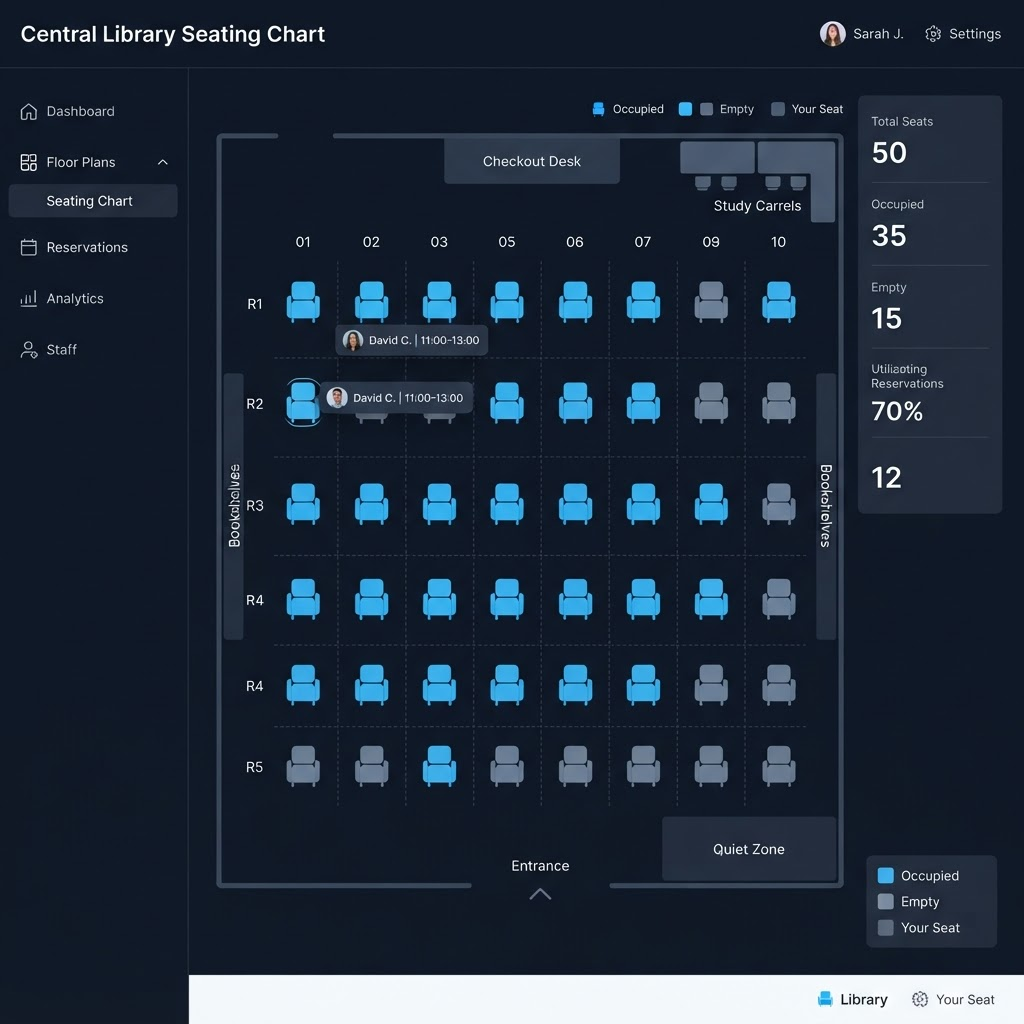
Study-space capacity control
Model your own study space
Change the values to see how assignment, occupancy and unavailable seats affect operational visibility. This is an illustrative model, not a Delhi market average.
AVAILABLE
22
seat records
ASSIGNED
136
seat records
OCCUPIED
112
seat records
RESERVED
14
seat records
UNAVAILABLE
8
seat records
Assignment rate
76%
Current occupancy rate
62%
Operational capacity status
Capacity available
Labels and text accompany color so the matrix remains understandable without relying on color alone.
Responsible study-space operations
Good study-space management also means responsible operations
Delhi’s study-library environment has made premises, occupancy and safety attention impossible to treat as an afterthought. Responsible operators should think about approved premises use, clear access and exits, sensible occupancy, emergency procedures, staff awareness, maintenance and owner oversight alongside the member experience.
Libix can support operational administration.
Libix does not replace statutory approvals, fire-safety certification, building compliance or professional safety assessment. Verify current requirements with relevant Delhi authorities and qualified professionals for the specific premises.
Operator checklist
Delhi study-space environment
The street context changes. The operating discipline remains.
Dense exam districts, university areas and long-hour reading rooms create different member questions. They still require clear records for seats, memberships, payments, attendance and renewals.
Review seat management →Real operating context
Keep the desk, member and payment record connected
A professional study facility is still a physical room. The digital system should help the owner manage its recurring operational work without pretending to solve premises compliance.

Multi-location thought experiment
One owner, multiple operating contexts
If a study-library business expands beyond one location, separate registers and isolated spreadsheets make oversight increasingly difficult. A shared operating system can provide a consistent structure for memberships, collections, seats and branch-level reporting. The Delhi locations shown here are illustrative examples, not existing Libix branches or customers.
Delhi FAQ
Questions owners ask before choosing software
Is Libix suitable for study libraries in Delhi?
Libix is positioned for paid study libraries, reading rooms and self-study centres that need connected records for members, seats, memberships, fees, attendance and daily operations. Evaluate the current product against your own Delhi operating workflows before deciding.
Can Libix manage reading rooms in Old Rajinder Nagar or Mukherjee Nagar?
The relevant operating questions are the same in any locality: membership plans, seat assignment, shifts, attendance, collections, renewals and owner visibility. Libix should be tested with the actual long-duration and multi-exam scenarios your facility serves.
Can Libix manage fixed and floating seats?
Evaluate seat, zone and allocation workflows with the fixed, floating or hybrid arrangement your study library uses. Confirm the exact current behavior during a product evaluation rather than assuming every arrangement is identical.
Can I manage multiple study shifts?
Study shifts can be evaluated alongside seat availability, membership entitlements and attendance. This is useful where different aspirants use the same study space across long operating windows.
Can Libix track membership renewals and expiry?
Membership lifecycle and renewal records are core operational questions for recurring study-library usage. Test activation, expiry, renewal and plan-change cases using representative member records.
Can I manage fees, receipts and outstanding dues?
Libix is designed around operational records such as fees, collections, payments, receipts and outstanding dues. Confirm the specific reconciliation workflow required by your facility during evaluation.
Can Libix manage more than one study-library branch?
For a growing business, evaluate branch separation, staff permissions, memberships, collections, seats and branch-level reporting against the current production implementation. The Delhi examples on this page are illustrative, not existing Libix branches.
Does Libix help with Delhi building or fire-safety compliance?
Libix is an operational Library OS and does not replace statutory approvals, fire-safety certification, building compliance or professional safety assessment. Operators should verify current requirements with relevant Delhi authorities and qualified professionals for their specific premises.
Is a free Libix trial available?
Libix currently communicates a six-month free trial subject to its approved trial policy and eligibility conditions. Review the current policy and speak with the team for applicable onboarding terms.
For Delhi study-library operators
Run the study space, not the registers
Bring members, seats, shifts, fees, attendance and renewals into one Library OS for paid study-library operations.