Libix Logo· Library OS
  • FAQs
  • Features
  • Pricing
  • Solutions
  • About Us
  • Libix Learning
  • Libix Knowledge
  • Libix Learning/Owner problems/Membership history

    Owner problems · membership continuity

    How to Track Membership History Correctly in a Study Library

    Preserve the path from first joining to renewal, expiry, freeze, plan change, seat allocation and correction without rewriting the past.

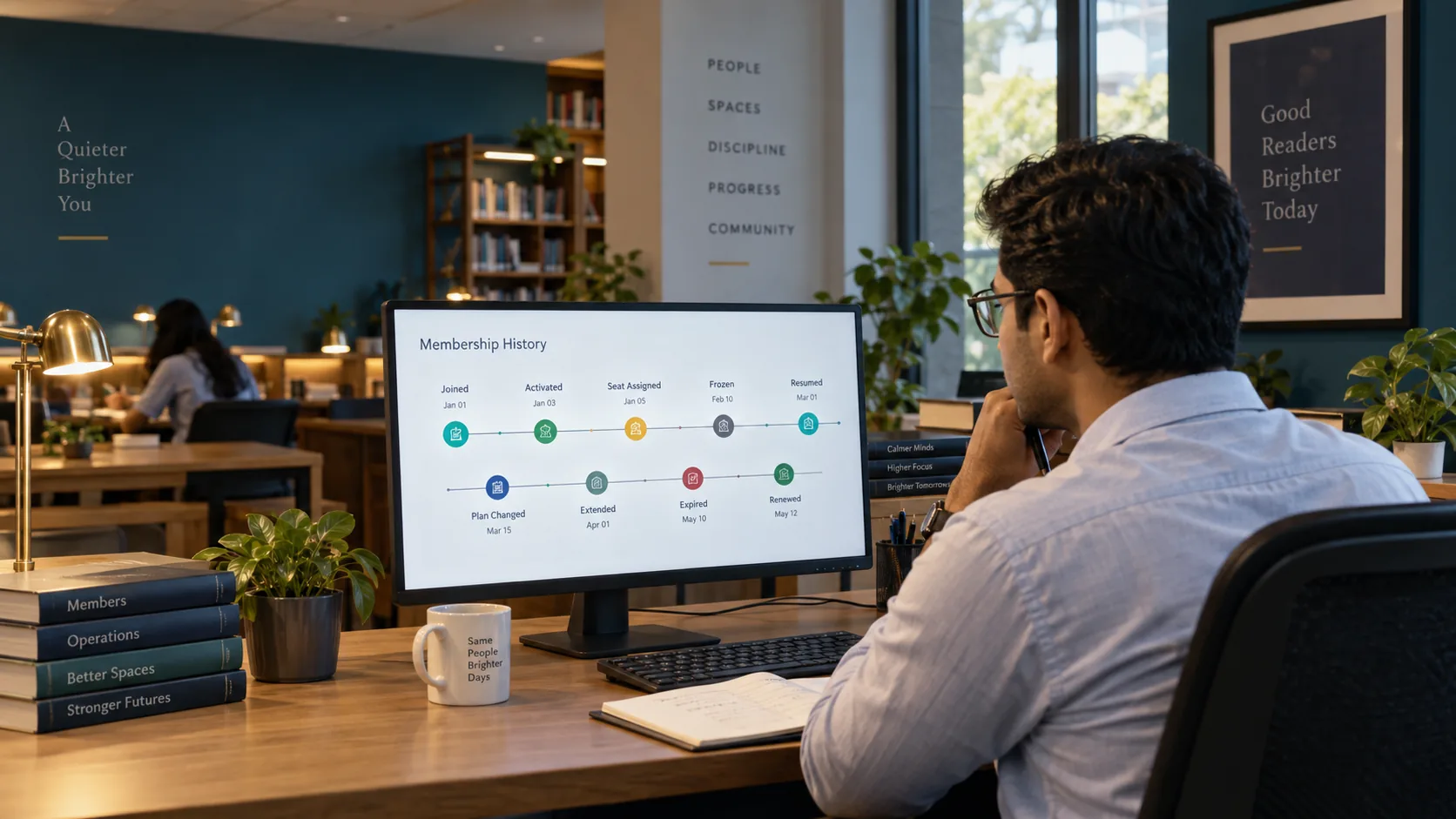
    Indian study library administrator reviewing a member membership history timeline

    Quick answer

    Current state tells you where the membership is now. History explains how it got there.

    Preserve original membership periods and record meaningful changes as dated lifecycle events. For each change, keep what was true before, what changed, when it became effective, why it changed and what became true afterward.

    Member ≠ membership. Membership ≠ plan. Membership history ≠ payment history, attendance history or audit log.

    Core model

    Member → Membership Period(s) → Lifecycle Events → Related Records → Reconstructable Timeline

    Current state vs history

    A current card is not a timeline

    Current state

    Full-day plan v2

    Active period 1 · Morning zone · Seat A12

    Historical context

    9 preserved events

    Joined, freeze, resume, plan change, expiry, renewal, payment linkage and correction remain explainable.

    Canonical model

    Connect the membership to related records

    Member→
    Membership period(s)→
    Lifecycle events→
    Entitlements / seats→
    Finance / attendance→
    Reconstructable timeline

    The timeline is a view over underlying records; it should not become a reason to flatten membership, payment, attendance and audit data into one mutable row.

    Timeline explorer

    What happened, when, and why?

    2026-01-05

    Joined

    Before: No membership
    After: Period 1 created

    Initial admission

    2026-01-06

    Seat assigned

    Before: Unassigned
    After: Morning zone · Seat A12

    Capacity allocation

    2026-03-01

    Freeze approved

    Before: Active access
    After: Frozen under policy

    Approved temporary pause

    2026-03-20

    Resumed

    Before: Frozen
    After: Active access

    Resume date reached

    2026-04-01

    Plan changed

    Before: Morning plan v1
    After: Full-day plan v2

    Effective-dated upgrade

    2026-05-31

    Expired

    Before: Active period 1
    After: Period 1 expired

    End date reached

    2026-06-01

    Renewed

    Before: Expired
    After: Period 2 active

    New membership period

    2026-06-01

    Payment linked

    Before: No payment reference
    After: Receipt linked to period 2

    Financial record linkage

    2026-06-02

    Date corrected

    Before: Recorded start 02 Jun
    After: Effective start 01 Jun

    Verified data correction

    Past-date reconstruction

    What was true on this date?

    Choose a date to inspect the terms that were effective then. This is a conceptual model: a production system must apply its own verified date and event rules.

    Effective state

    Plan Full-day plan v2
    Status Active period 1
    Seat / shift Morning zone · Seat A12

    History integrity checklist

    Find gaps before they become disputes

    Completed checks: 0/6. Backdated events should receive stronger validation because they can change reports and records already relied upon.

    Model periods, not one endlessly edited record

    A member represents the person or customer identity. A membership period represents a defined service relationship over time. One member can have multiple periods: an expired first period, a renewal and an active subsequent period. Creating a new period should not delete or overwrite the previous one.

    Record lifecycle events with effective and recorded time

    Meaningful events include activation, renewal, freeze, resume, extension, plan change, expiry, cancellation and correction. Each event should identify its type, effective date/time, recorded date/time, reason or context and actor where appropriate. Event time tells you when it was entered; effective time tells you when it became true for the business.

    Preserve plan versions, prices and entitlements

    A membership is not the same as a reusable plan. If a plan configuration or price changes later, historical membership terms must remain explainable. Store the plan/version and historical price context that applied to each period or event. Do not silently replace old context with today’s configuration.

    Keep related histories linked but separate

    Seat and shift allocation, attendance, invoices, payments, receipts, discounts and concessions have their own histories. Link them to the relevant membership period or lifecycle event rather than flattening them into a single current membership row. Historical seat allocation should not be overwritten by today’s allocation.
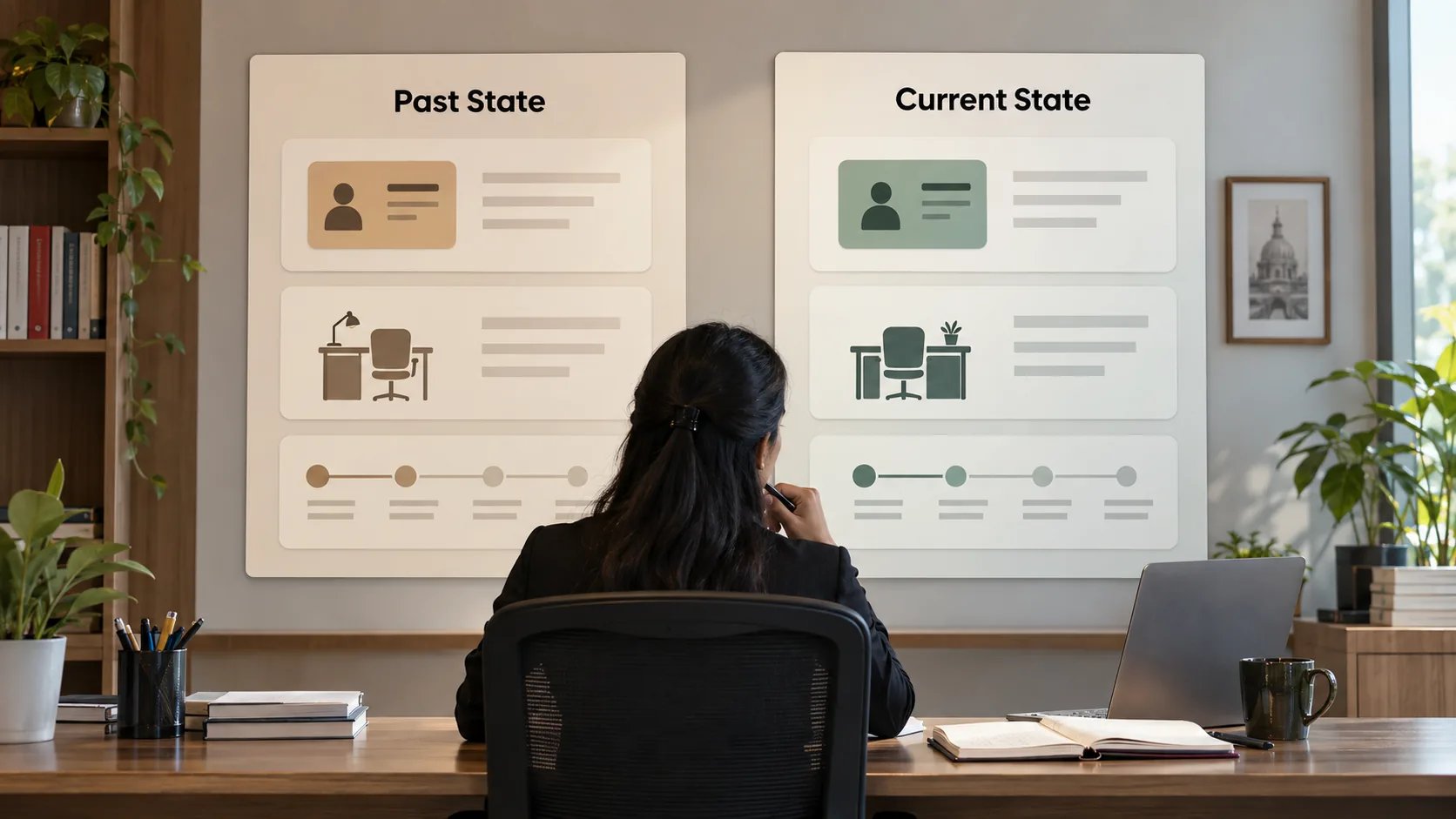
    Study library manager comparing past and current membership plan seat and lifecycle records

    Treat corrections and backdated events carefully

    A correction fixes incorrect data, such as a mistyped date. It is not a replacement for a genuine freeze, plan change or renewal event. Backdated changes deserve stronger validation because they can alter capacity, finance, attendance and reports already relied upon. Conflicting or overlapping effective periods should be detected rather than silently accepted.

    Archive for operational clarity without falsifying history

    Expired records may be archived or soft-deleted from routine screens when that supports operations, but the approach must not make historical business truth disappear. Hard deletion of consequential records should be tightly controlled and aligned with applicable privacy, contractual and operational requirements; there is no universal retention period to invent here.

    Business history is not the audit log

    Business history answers what happened to the membership relationship. An audit log answers which user or system action recorded, edited, approved or attempted an operation. They complement each other but should not be treated as the same dataset. Permissions should limit who can apply consequential changes and corrections.

    Where Libix fits

    Use verified records and workflows to keep membership continuity explainable

    Libix — Library OS is a study-library operations product from CodePex Technologies Private Limited. This guide describes the information architecture and operating discipline; current Libix membership-history, versioning, permissions and audit capabilities must be verified before making a product claim.

    Review lifecycle changesDesign membership plansReview revenue context

    Membership-history SOP

    Before closing a membership-history change

    □ Identify the member and period
    □ Classify the business event
    □ Record effective and recorded times
    □ Preserve before and after context
    □ Link seats, attendance and finance
    □ Validate overlaps and backdating
    □ Capture reason and actor
    □ Communicate the resulting state
    □ Review the reconstructable timeline

    FAQs

    Membership history questions

    Is the current membership record enough history?

    No. Current state tells you where the membership is now. A complete history preserves periods and meaningful events so the path to the current state can be reconstructed.

    Should a renewal overwrite the expired membership?

    No. A renewal should establish a subsequent membership period while preserving the previous period and its terms.

    Is membership history the same as payment history?

    No. Payments, invoices and receipts are separate financial histories linked to the relevant membership period or event.

    Should old plan prices change when the plan price changes today?

    No. Historical price context should remain attached to the period or transaction to which it applied.

    Are audit logs and business history the same?

    No. Business history explains membership transitions. Audit logs explain system or user actions that recorded or changed data.

    Back to Libix LearningBrowse Libix Knowledge

    Claim your 6 months Free Trial

    Start with a free demo or get in touch with our team to learn more about Libix and how we can help your library succeed.

    Call Us - +91 91700 91269Email Us

    Libix is the simplest library management software for modern libraries in India. Built to help library owners focus on their members instead of spreadsheets.

    CIN : U93000UP2017PTC091269
    URN : UDYAM-UP-50-0143487
    Privacy Policy·Terms & Conditions·Refund Policy·Trial Policy·Disclaimer·

    Libix is a proud product of CodePex Technologies Private Limited.
    © 2026 Libix · All rights reserved.