
Libix Logo· Library OS
  • FAQs
  • Features
  • Pricing
  • Solutions
  • About Us
  • Libix Learning
  • Libix Knowledge
  • Libix Learning/Financial planning/Design membership plans

    Membership architecture · pricing and operations

    How to Design Membership Plans for a Study Library

    A membership plan is a contract of access and rules—not just a price tag. Define what members can use, when, where, for how long and what happens next.

    Indian study library owner designing membership plans with access shifts seats duration and pricing

    Quick answer

    Design the rule system before displaying the price

    Start with member needs and convert them into explicit access entitlements, schedules, seat or zone rules, duration, pricing, lifecycle behaviour, capacity controls, financial treatment and exceptions.

    A plan is reusable. A membership is a person’s actual enrollment under that plan. An invoice, payment, seat allocation and attendance event are related records—not substitutes for the plan definition.

    Core principle

    A membership plan is a contract of access and rules—not just a price tag.

    Plan anatomy

    Need → entitlement → rules → capacity → controls

    A membership plan is a reusable definition of access and rules. It is not merely a price, invoice, payment, seat allocation or attendance record.

    Member need→Entitlement→Schedule→Seat / zone→Duration→Price→Lifecycle→Capacity→Controls

    Plan

    Reusable rules and entitlements that can be offered.

    Membership

    A member’s actual enrollment under a plan for a defined period.

    Operational records

    Invoice, payment, allocation and attendance are related records—not the plan itself.

    Membership plan builder

    Create a structured blueprint, not a universal recommendation

    These fields are a design aid. They do not prescribe a best plan, price, duration or shift for every library.

    Blueprint preview

    name
    Illustrative Morning Study Plan
    need
    Members who need a defined morning access window
    access
    06:00–12:00
    seat
    Assigned seat in an eligible zone
    duration
    One defined membership period
    price
    Documented after pricing analysis
    amenities
    Study access; optional add-ons remain separate

    Selected design fields: 8. Add only the dimensions that are meaningful for the operating model.

    Lifecycle architecture

    A plan’s rules must survive the membership lifecycle

    At Active membership, define the applicable entitlement, dates, capacity relationship, financial state, communication and history. Renewal is a lifecycle event or new period where supported; it should not silently overwrite earlier history.

    Plan complexity

    Not every difference deserves a new plan

    Member needs, access windows, shifts, seat or zone eligibility, amenities, duration, price, lifecycle rules and capacity can all vary. But turning every combination into a separate plan can make sales, staff, reporting and renewal harder.

    Use optional add-ons or controlled attributes where they genuinely reduce plan proliferation without making entitlements ambiguous.

    Guardrail

    Fewer coherent plans can be better than many nearly identical combinations.

    There is no universal ideal number of plans.

    Capacity and lifecycle controls

    Prevent impossible promises

    Check eligible seat / zone capacity before sale
    Prevent overlapping entitlements where rules conflict
    Make start and end dates explicit
    Distinguish expiry, renewal, freeze and cancellation
    Record extensions separately from renewals
    Preserve plan version and effective date
    Do not silently rewrite existing membership terms
    Discontinuing a plan for new sales does not automatically terminate active memberships

    Start with member needs

    Define who the plan is for and what problem it solves. A morning access plan, a full-day plan and a zone-specific plan may serve different needs, but the names alone do not make the entitlement clear. Describe days, operating hours, shift windows, eligible seats or zones and relevant amenities.

    Separate plan architecture from pricing methodology

    The plan defines what is being offered. Pricing decides what the defined offer costs under the business model. Duration, price, discounts, deposits, one-time charges, taxes and payment terms need consistent treatment, but they should not be compressed into one ambiguous price label.

    Optional add-ons can sometimes reduce unnecessary plan combinations. A locker, printing service or other genuine amenity may be clearer as a separate controlled add-on than as a new plan for every possible combination.

    Capacity must be checked before a plan is sold

    Physical seats are not the same as memberships or seat-time capacity. A plan with a shift or zone entitlement can create a capacity promise. Before sale, check whether that entitlement can be served without conflicting with existing commitments. Allocation is not attendance; the plan should not silently promise attendance outcomes.

    Make dates and lifecycle rules explicit

    Define joining or activation, start date, end date, expiry, renewal, freeze, extension, plan change, cancellation and refund interactions. Freeze is not cancellation. Extension is not renewal. A renewal is a lifecycle event or new period where the architecture supports it, and should not silently overwrite historical terms.

    Version plans instead of rewriting history

    If a plan changes its access window, price, seat rules or expiry behaviour, use an effective date or versioning approach where supported. Existing memberships should retain the terms relevant to their period. Discontinuing a plan for new sales does not automatically terminate active memberships.

    Design communication for staff and members

    Members should see the access entitlement, dates, restrictions, included amenities, price treatment and important exceptions in understandable language. Staff need the operational details required to sell, allocate, renew, freeze or escalate consistently. Revenue, collection, profit and cash remain separate financial views.

    Measure plan performance without inventing universal targets

    Useful questions include active memberships by plan version, realized price, capacity use, expiry and renewal outcomes, plan changes, complaints, refunds, dues and exception volume. There is no universal ideal number of plans, shift, duration or discount. Keep the definitions consistent and investigate what the records actually show.
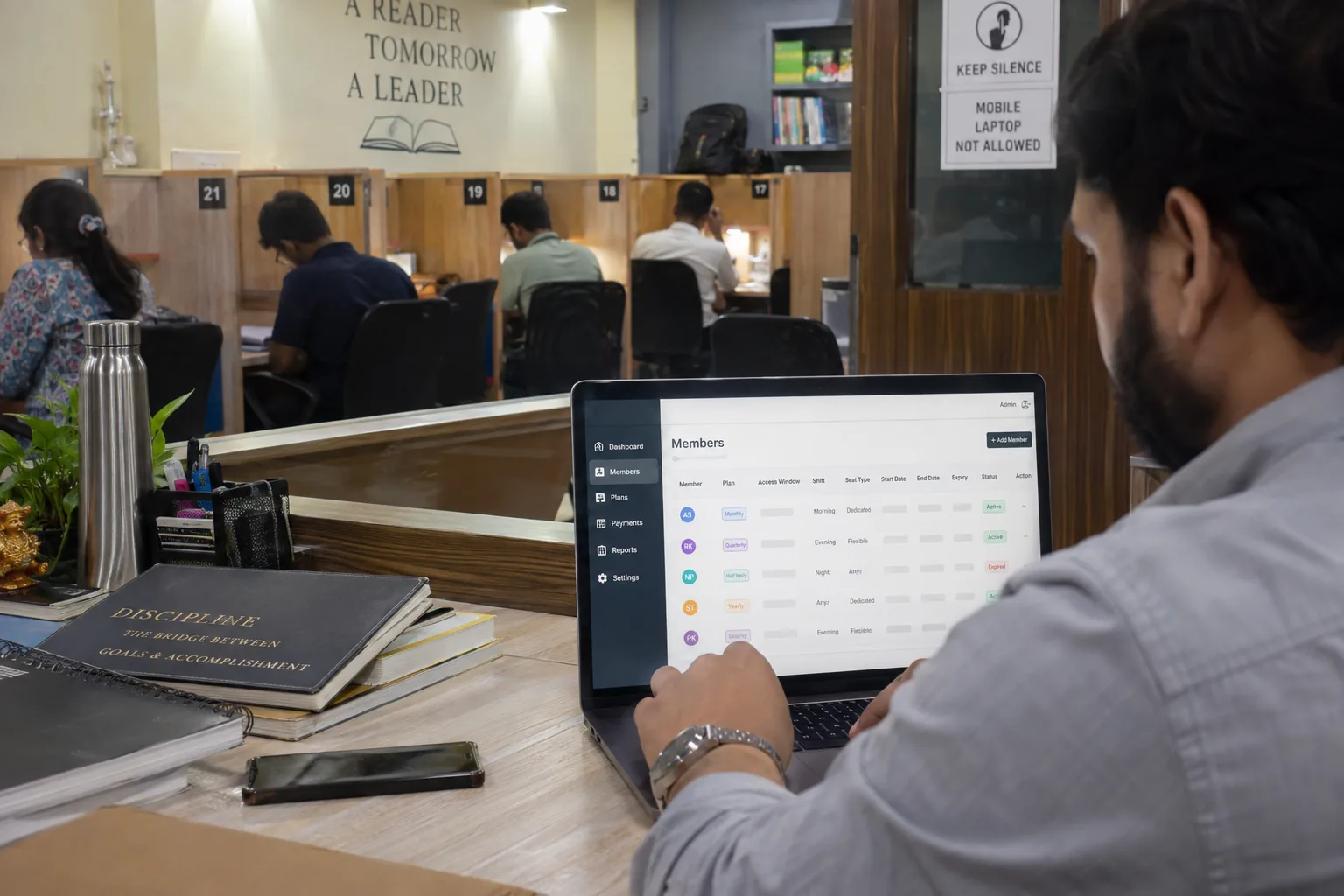
    Study library administrator reviewing membership access seat shift expiry renewal and plan history

    Lifecycle and history

    A plan change should not erase the member’s past

    Keep plan version, membership period, dates, entitlements and related financial or capacity records understandable across renewals, extensions and changes.

    Where Libix fits

    Use a structured plan model where current functionality is verified

    Libix — Library OS is a study-library operations product from CodePex Technologies Private Limited. Where current functionality is implemented and verified, structured membership, capacity, finance and lifecycle records may support consistent plan operations. Current plan configuration, entitlement, seat, shift, renewal, versioning and reporting capabilities must be verified before making product claims.

    Review pricing decisionsModel revenue scenariosReview occupancyReview profit margin

    Membership-plan blueprint checklist

    Before publishing a plan

    □ Define member need
    □ Define access entitlement
    □ Define days and hours
    □ Define shift and zone
    □ Define seat model
    □ Define amenities and add-ons
    □ Define duration and dates
    □ Define price and discount rules
    □ Define expiry and renewal
    □ Define freeze and extension
    □ Define change and cancellation
    □ Check capacity conflicts
    □ Preserve plan version
    □ Explain to staff and members
    □ Define measurement questions

    FAQs

    Membership-plan design questions

    What should a study-library membership plan contain?

    A plan can define member need, access entitlement, days and hours, shift, seat or zone eligibility, amenities, duration, price rule, lifecycle rules, capacity controls, financial rules, exceptions and version information.

    Is a membership plan just a price and duration?

    No. Price and duration are only two attributes. Access windows, shifts, seats, zones, amenities, dates and lifecycle rules may be equally important.

    What is the difference between a plan and a membership?

    A plan is a reusable set of rules. A membership is an individual member’s actual enrollment under that plan for a defined period.

    Should every difference become a separate plan?

    No. Too many combinations create operational cost. Use meaningful plan differences and controlled add-ons or attributes where appropriate.

    How should renewal, freeze and extension be handled?

    They should be distinct lifecycle concepts with explicit rules and preserved history. A renewal is not the same as an extension, freeze or cancellation.

    What happens when a plan is discontinued?

    Stop new sales according to the effective date, but do not automatically terminate active memberships. Existing terms and historical versions should remain understandable.

    Back to Libix LearningBrowse Libix Knowledge

    Claim your 6 months Free Trial

    Start with a free demo or get in touch with our team to learn more about Libix and how we can help your library succeed.

    Call Us - +91 91700 91269Email Us

    Libix is the simplest library management software for modern libraries in India. Built to help library owners focus on their members instead of spreadsheets.

    CIN : U93000UP2017PTC091269
    URN : UDYAM-UP-50-0143487
    Privacy Policy·Terms & Conditions·Refund Policy·Trial Policy·Disclaimer·

    Libix is a proud product of CodePex Technologies Private Limited.
    © 2026 Libix · All rights reserved.