
What came in?
Owners need collection context before asking what the period earned or can support.
Evaluation view: Review member payments, receipts, dates and account scope using the current supported view.
For owners monitoring collections and operating spend
See collections, expenses and account movements in the same period context so an owner can ask better questions about the operation. Libix keeps the financial story connected to source records without presenting operational finance as a replacement for full accounting advice or statutory systems.
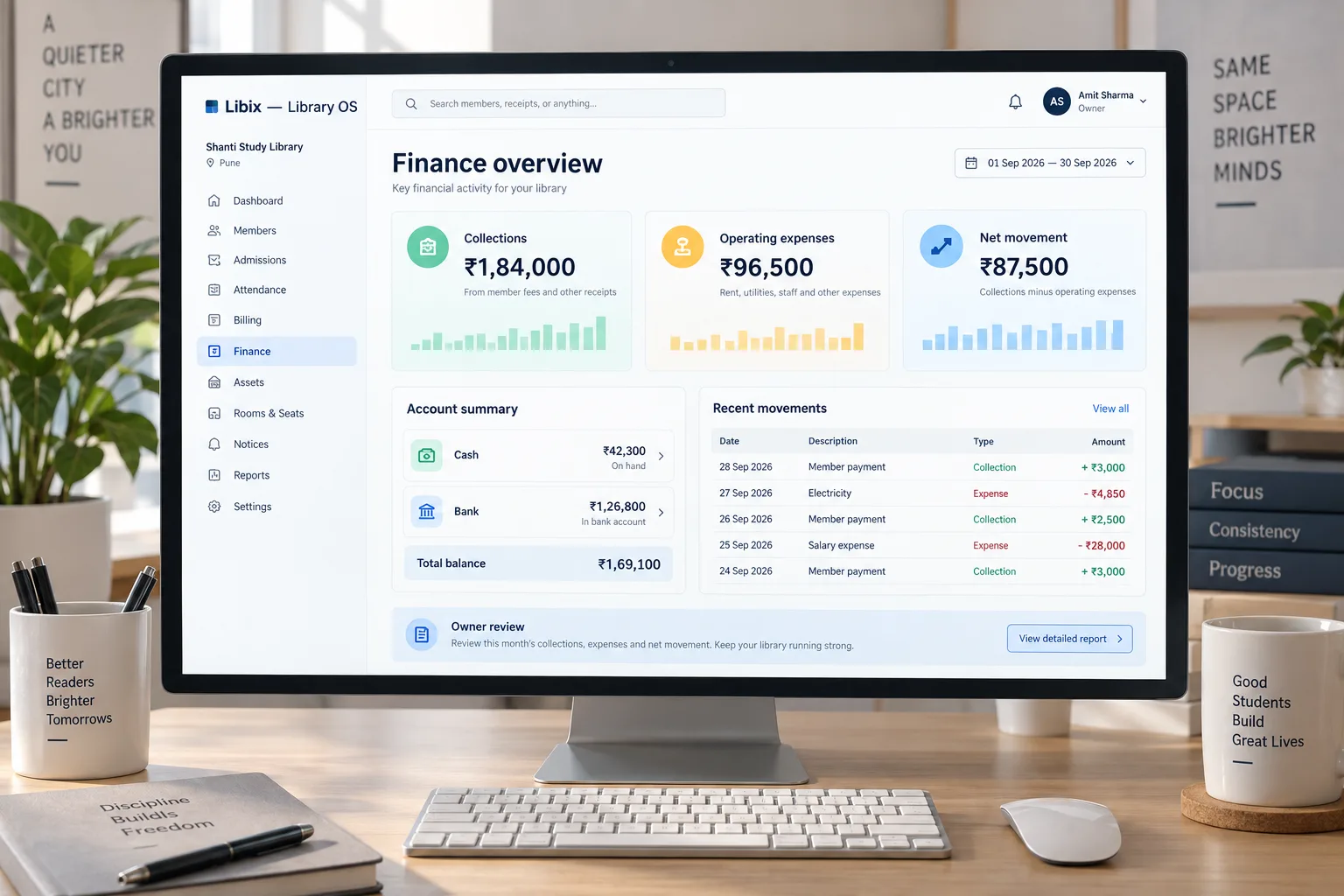
The owner’s period-end question
The owner compares fee collections against rent, electricity and salary expenses for a period. Staff need to locate the right collection or expense record, while the owner needs to know which account, date and source evidence support the movement before making a decision.
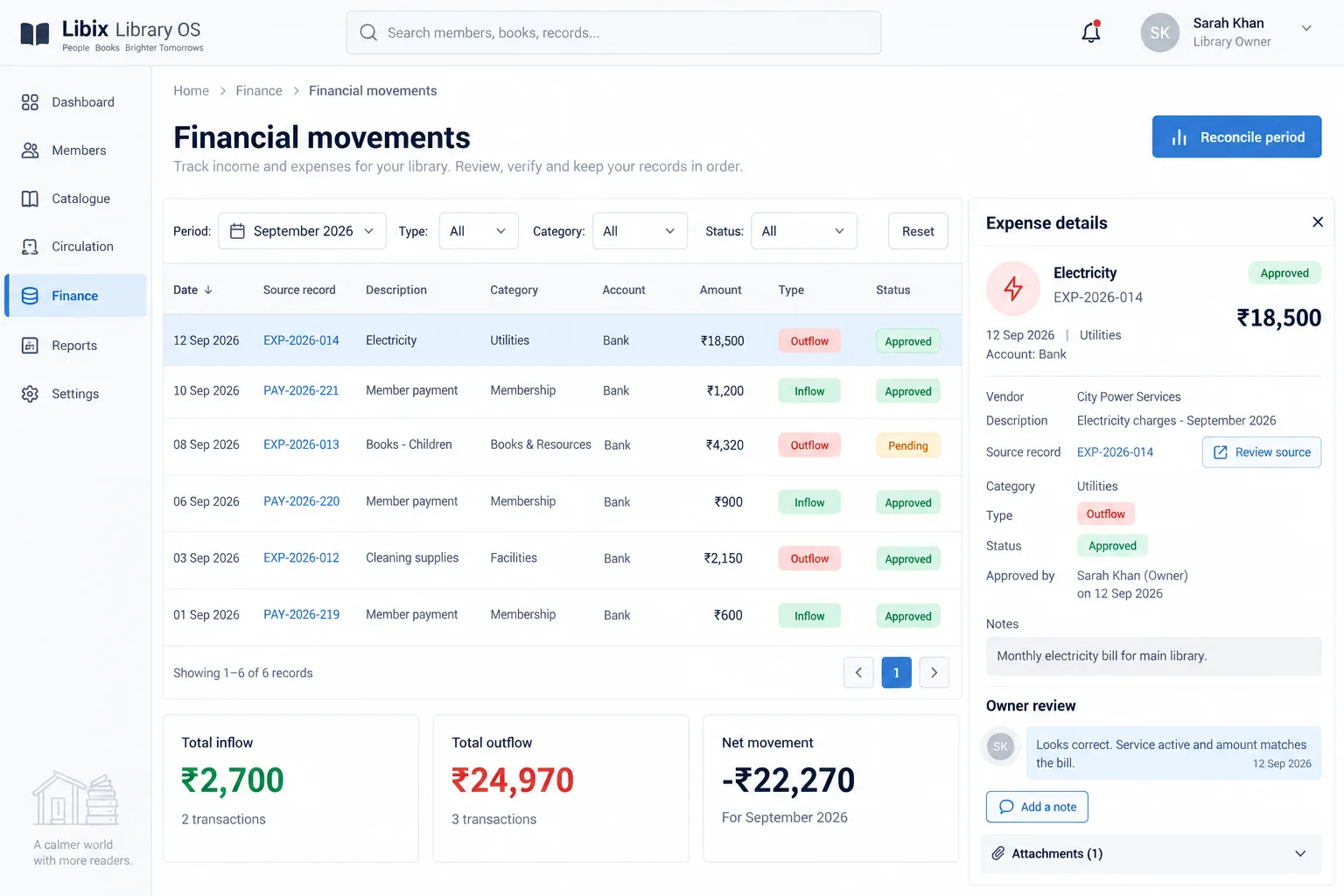
Focused movement review
The focused view keeps date, source record, category, account, amount, movement type, approval and notes together. That evidence helps an owner ask whether a movement is correctly classified and included in the chosen period.
How the work fits together
Operational finance becomes easier to explain when the period, account scope, source records and owner decision remain visible in the same sequence.
01
Set the date range and scope before comparing collections, expenses or movements.
02
Check member payments and receipt context without treating collections as profit.
03
Group expenses such as rent, utilities and salary with their source and approval context.
04
Compare the defined inflows and outflows, then keep owner judgment and reconciliation visible.
Capabilities by question
The page focuses on operational finance records and review. Verify current screens, fields, permissions, account behavior and report definitions before presenting a feature as live.
Owners need collection context before asking what the period earned or can support.
Evaluation view: Review member payments, receipts, dates and account scope using the current supported view.
Rent, electricity, salary and other operating expenses can affect the period differently.
Evaluation view: Inspect category, amount, source record, status and approval where supported.
A single balance hides the evidence needed to explain an account change.
Evaluation view: Use the financial movement or ledger view with date, source, account, inflow and outflow context.
A result is only meaningful when collections and expenses use a stated date basis.
Evaluation view: Apply the supported period filter and document exclusions or timing differences before deciding.
Cash, bank and combined scopes can answer different operating questions.
Evaluation view: Keep account context visible and verify transfer, reconciliation and closing behavior.

Product-in-use walkthrough
Use this sequence to evaluate the finance questions your own study-library operation needs to support:
Start with collections
The owner reviews member payments and the receipt or source context for the chosen period.
Add operating spend
Rent, electricity and salary expenses are checked with category, account, date and approval context.
Review the movement
The owner compares the defined inflows and outflows, then investigates exceptions before using the view for a decision.
Fit and decision criteria
Can the team state the date range, included movements and timing basis before comparing collections and expenses?
Can staff open the source record behind a collection, expense, transfer or adjustment?
Can the team distinguish operational finance visibility from full accounting, tax and statutory advice?
Connected Libix modules
Memberships and fees create collection context, staff and operations create expense context, accounts give movements scope and reports help owners review a chosen period. Review the study-library management solution, the fee-management page or return to the Solutions hub.
Questions for evaluation
A period view is useful when collections and operating expenses need to be compared on the same basis. Confirm the current filters, date basis, included records and report behavior in the Libix finance workflow.
No claim is made here that the operational ledger is a full double-entry accounting general ledger. Use it to evaluate traceable financial movements and ask your accountant and the product team what accounting, tax and statutory requirements remain outside the workflow.
They are different management concepts. Collections describe money received, revenue depends on the defined recognition basis, and profit or surplus also considers expenses. Keep the definitions and period basis visible before interpreting a result.
A useful expense workflow should retain category, amount, account, period, approval and source context. Confirm the current fields, attachments, correction history and permissions during a demonstration.
Account scope matters when reviewing a running balance or movement list. Ask how the current product distinguishes cash, bank and combined views and how transfers or reconciliation are represented.
Bring one member collection, one rent or electricity expense, one salary expense and one period-end review question. Ask the team to trace each movement to its source and explain the resulting owner view.
See the operational finance workflow
Walk through collections, rent or electricity, salary expense, account scope, period filters, source records and owner review with the people who manage your study-library operation.
CodePex Technologies Private Limited - Verify current capabilities and terms with the product team.