
What changed in admissions and renewals?
The owner needs to know which memberships started, remain active, are unpaid or need renewal attention.
Libix view: Review supported admission and renewal records, then decide what staff should follow up.
For owners running a paid study-library business
At month-end, review collections, unpaid memberships, running expenses and usable seats without rebuilding the picture from separate registers. Libix brings the operating records into one place for clearer owner decisions.
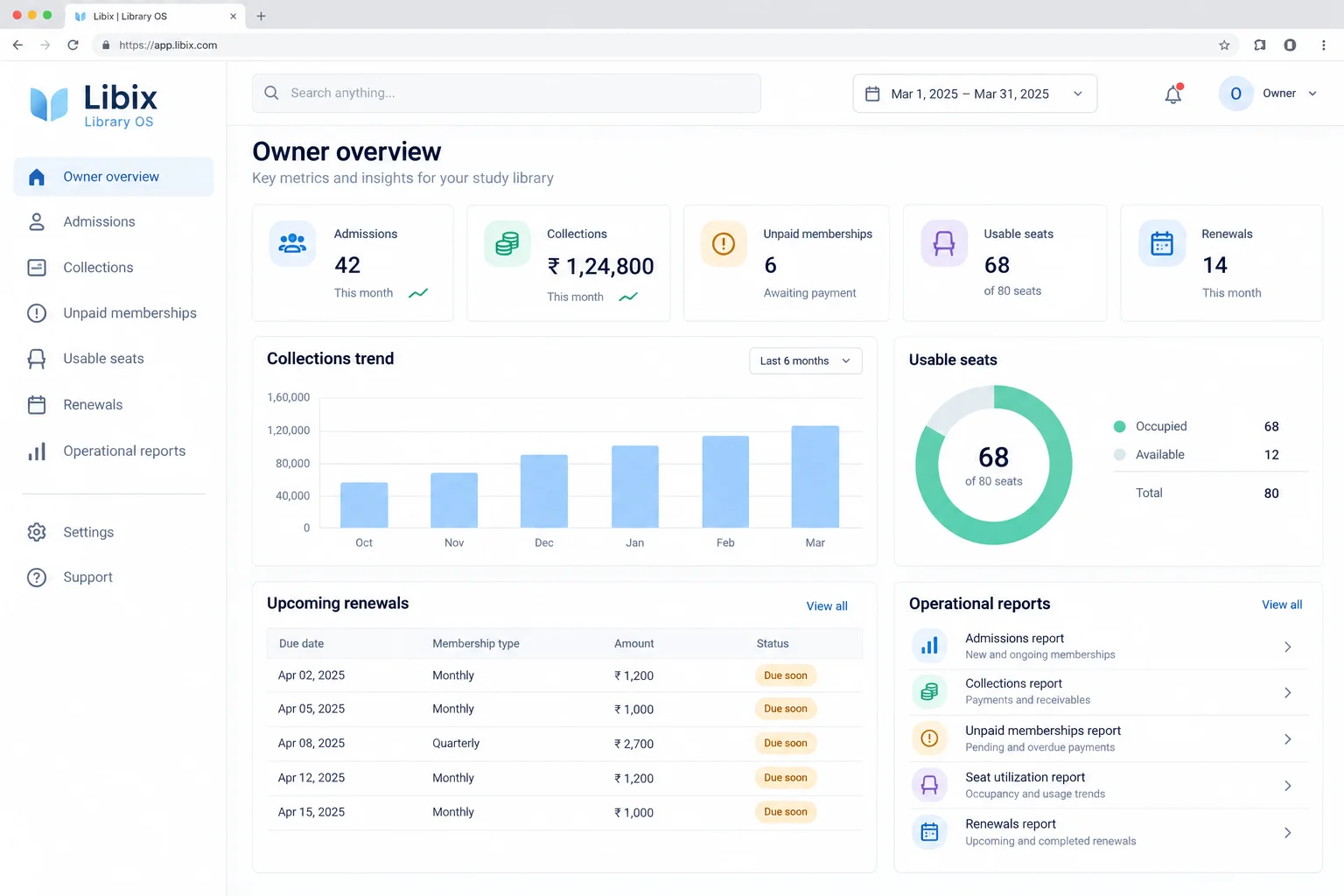
The month-end question
At month-end the owner reviews collections, unpaid memberships, running expenses and usable seats. Each one answers a different question, but the decision is incomplete if the records cannot be understood together.
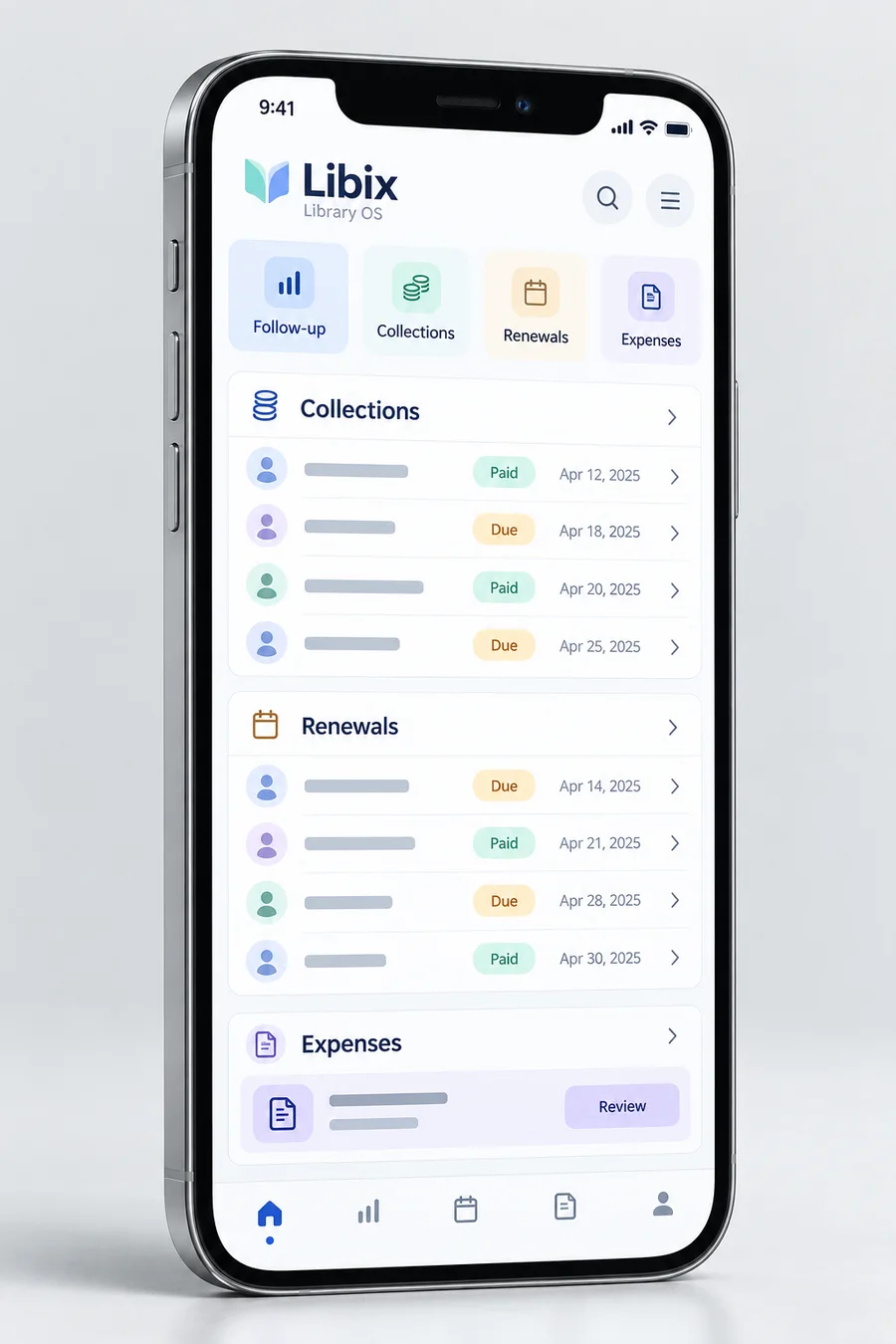
Owner follow-up
A compact collections and renewals view can help an owner identify what deserves attention before the next conversation. Use the current product demonstration to verify device support, access, permissions and the available follow-up workflow.
How the work fits together
This sequence connects operating records without turning a dashboard into a promise of profitability.
01
Who joined, continued or needs follow-up?
02
What was received and what remains open?
03
Which operating cost needs evidence or review?
04
What capacity or workflow question needs a decision?
Capabilities by question
A business overview is useful when it keeps financial, capacity and member records distinct while making their relationships easier to inspect.
The owner needs to know which memberships started, remain active, are unpaid or need renewal attention.
Libix view: Review supported admission and renewal records, then decide what staff should follow up.
Collections answer a cash and payment question; unpaid memberships answer a follow-up question.
Libix view: Keep the member, charge, payment, receipt and outstanding context distinguishable.
Running expenses affect the operating picture and should not disappear from the owner’s month-end conversation.
Libix view: Review the supported expense record and its evidence, approval or payment status.
Seats, allocations and attendance provide different lenses on physical capacity.
Libix view: Use supported operational reports with an explicit definition for the question being asked.

Product-in-use walkthrough
Use this fictional example during a demonstration:
Admissions
Two new member records need plan and start-date review.
Collections
A payment and an outstanding amount must remain distinguishable.
Expenses
One running expense needs evidence and owner review.
Capacity
Usable seats are checked separately from attendance and membership status.
Fit and decision criteria
Can the team distinguish revenue, collections, dues, expenses, usable seats and attendance?
Can a number or status be traced back to a useful record and period?
Can the owner see which item needs a staff action, approval or follow-up?
Connected Libix modules
Admissions create member context. Memberships and seats describe capacity. Collections and dues describe money movement. Expenses add operating cost. Reports help the owner ask a better question. Review the broader study-library management solution or return to the Solutions hub.
Questions for evaluation
An owner can evaluate a connected view of admissions, membership status, collections, unpaid amounts, usable seats, renewals, expenses and operational reports. Confirm the current available views and definitions during a demonstration.
The product is designed around connected operational records, so a collections question can be reviewed alongside member and membership context. Verify the exact payment, receipt, dues and reporting workflow for your business.
Expense review is a relevant part of the business-management conversation. Ask the product team to demonstrate the current expense record, approval, payment and reporting scope before treating it as a complete finance system.
Capacity and membership are different business questions. A useful evaluation should show how the current product represents seats, allocations, attendance and member status without treating one metric as another.
No. Libix can support records, visibility and decision preparation, but demand, pricing, service, costs and leadership determine business outcomes.
Bring a month-end review example: admissions, unpaid memberships, collections, a running expense, usable seats and upcoming renewals. Use your definitions and records to test the workflow.
See the business workflow
Walk through admissions, collections, unpaid memberships, expenses, usable seats and renewals with the people who review them.
CodePex Technologies Private Limited · Verify current capabilities and terms with the product team.